Risorse · 10
Integrità delle informazioni: verifica della provenienza, del contesto e delle trasformazioni.
Una procedura per qualificare un documento, un'immagine o un video prima di citarlo, condividerlo o utilizzarlo in una decisione.
Aggiornato · 8 min

Obiettivi di questa guida
- Trovare la versione più antica accessibile
- Separare un file autentico da una didascalia falsa
- Documentare le trasformazioni
- Correggere senza cancellare la traccia
Verifica rapida
- Chi ha pubblicato il file e da dove lo ha ottenuto?
- Esiste una versione precedente?
- La posizione e la luce sono compatibili?
- I metadati sono coerenti ma non considerati sufficienti?
- Quale contenuto dipende da queste prove?
Metodo passo passo
- 1
Preservare l'elemento
Conservare l'URL, la data di accesso, il file ricevuto, il contesto visibile e un hash, ove consentito dalla legge. Lavorare su una copia e registrare ogni conversione.
Risultato: voce di registro e hash.
- 2
Tracciare la provenienza
Cercare la pubblicazione più antica, l'autore dichiarato, i relay intermedi e qualsiasi versione ritagliata o ricompressa.
Risultato: catena di provenienza.
- 3
Verifica del contenuto e del contesto
Confronta terreno, edifici, condizioni meteorologiche, ombre, lingua, cronologia ed eventi noti. Un'immagine autentica può essere riutilizzata con un luogo o una data falsi.
Risultato: ipotesi confermate e respinte.
- 4
Ispeziona i metadati
Utilizza EXIF, codifica, dimensioni e cronologia come indizi. La loro presenza o assenza non è mai sufficiente a dimostrare l'autenticità.
Risultato: documentazione tecnica interpretata.
- 5
Corroborazione indipendente
Trova una fonte primaria, un'altra prospettiva, un documento ufficiale o un testimone indipendente. Identifica le ripetizioni che dipendono tutte dallo stesso file.
Risultato: matrice di corroborazione.
- 6
Pubblica e correggi
Indica il livello di attendibilità, i limiti, il metodo e la fonte. Se la conclusione cambia, aggiorna le pagine collegate e conserva una nota di correzione datata.
Risultato: decisione editoriale e registro delle correzioni.
Capire, calcolare e decidere
Fotografia reale: distinguere file, didascalia e data della pagina
La scheda NASA di questa immagine «Earthrise» indica Lunar Orbiter 1 e attribuisce il credito a NASA. La data della pagina non prova la data di scatto. Anche il solo titolo non identifica una missione.
Verifica un’affermazione precisa tornando alla scheda istituzionale. Conserva il riferimento e annota le modifiche di presentazione. Un hash identifica una copia, ma non prova la verità della scena o della sua interpretazione.
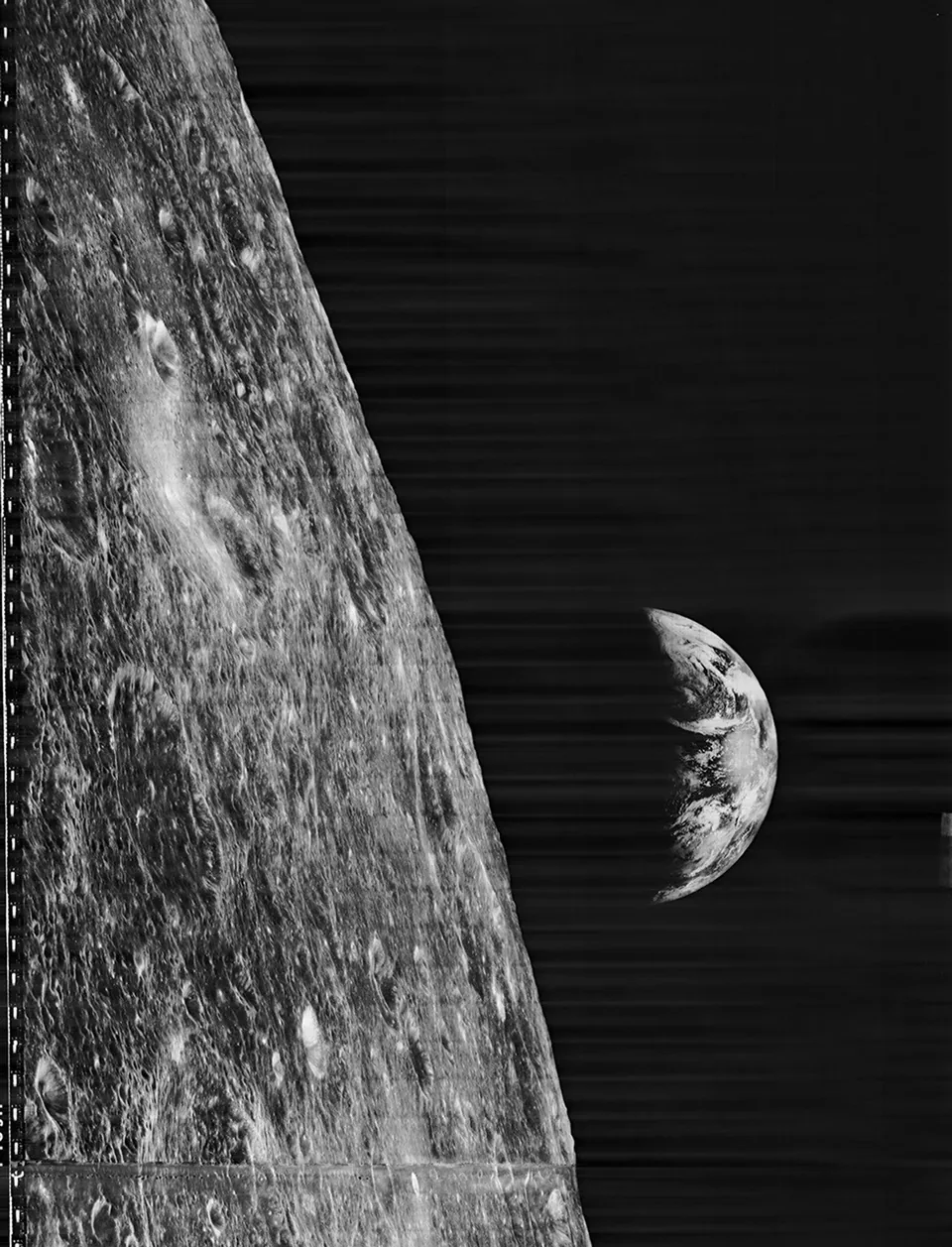
Indicatori e prove
| Indicatore | Interpretazione | Prova necessaria |
|---|---|---|
| File | La copia esaminata | Riferimento, data di consultazione e hash |
| Didascalia | Attribuzione pubblicata dalla fonte | Missione e credito confrontati con la scheda |
| Diritti | Condizioni di riuso, distinte dall’autenticità | Regole NASA, credito e ridimensionamento |
Esempio pratico fittizio
Situazione illustrativa
Un'immagine virale afferma di mostrare un evento recente. Il team cerca la prima pubblicazione, confronta le posizioni visibili e legge i metadati di provenienza, se presenti.
Decisione e prove attese
La nota distingue ciò che la provenienza tecnica attesta, ciò che le fonti indipendenti confermano e ciò che non può ancora essere concluso.
Indicatori di gestione
| Indicatore | Cosa misura | Prima azione |
|---|---|---|
| Provenienza | Elementi collegati a un'origine documentata | Gestire prove decisive senza una fonte preliminare |
| Corroborazione | Conclusioni supportate da indizi indipendenti | Eliminare le ripetizioni circolari |
| Ritardo di correzione | Tempo intercorso tra la scoperta di un errore e l'aggiornamento del contenuto | Mantenere l'elenco delle pagine dipendenti |
| Incognite visibili | Limitazioni importanti esplicitamente indicate | Impedire che un'ipotesi diventi un fatto |
Errori comuni
- Trattare i dati EXIF mancanti come prova di falsificazione
- Interrompere la ricerca dopo una ricerca inversa vuota
- Considerare le ripubblicazioni come fonti indipendenti
- Correggere una pagina ma non le sue copie
Domande frequenti
I metadati dimostrano che un'immagine è autentica?
No. Possono essere rimossi, modificati o ereditati da un dispositivo. Corroboralizzarli con contenuto, contesto e provenienza.
Come gestire i contenuti sintetici?
Cercare informazioni sulla provenienza disponibili, esaminare la coerenza e il contesto, quindi valutare la veridicità dell'affermazione associata.
Un errore deve essere eliminato?
Correggere il contenuto e la sua distribuzione in modo chiaro. Quando ha già influenzato i lettori, una nota datata spiega la modifica meglio di una scomparsa silenziosa.
Riferimenti: dati, usi e limiti
Documentazione consultata il .
Le note dettagliate di questa edizione sono disponibili in inglese.
| Fonte e finalità | Dato o riferimento verificato | Come utilizzarlo | Limite da conservare |
|---|---|---|---|
| FIRST · Traffic Light Protocol Indicate who may receive redistributed information. |
TLP 2.0 uses RED, AMBER, GREEN and CLEAR; AMBER+STRICT restricts sharing to the recipient organisation. Labels must not be translated. | Keep the marking with the information and check recipients before forwarding. Ask the source to clarify any ambiguity. | TLP is neither a formal classification nor a reuse licence. It does not guarantee content accuracy. |
| C2PA · Content Credentials Describe and verify certain content provenance information. |
C2PA specification 2.4 defines manifests, assertions and cryptographic binding mechanisms associated with media. | Examine what the manifest asserts, who signed it and whether validation succeeds. Test preservation after transformations and distribution. | Validated provenance does not establish the truth of a scene. Absence of a manifest does not demonstrate a fake. |
Provenienza dei media e convalida C2PA
Le note dettagliate di questa edizione sono disponibili in inglese.
A provenance report combines findings with different scopes. Signature, credential trust, content binding and scene context are separate assurances. Retain the exact asset and full report before summarising a result.
References use C2PA 2.4, dated April 2026 in its version history. This explorer explains twelve selected codes; it validates no file, retrieves no manifest and detects no AI-generated image. Cases are fictional and proposed checks are editorial guidance.
References consulted on .
Read twelve C2PA codes without overinterpreting them
The groups below are those used by the specification: success, informational and failure. A success code describes its particular check rather than replacing full validation. Missing information and a failed check cannot be reduced to a fake label.
| Code and group in C2PA 2.4 | Reported finding | Proposed follow-up | Conclusion to avoid |
|---|---|---|---|
claimSignature.validatedSuccess · success | The claim signature validated. | Also inspect trust, validity period and binding to the relevant asset. | The whole scene is true or every validation check is complete. |
signingCredential.trustedSuccess · success | The validator recognises the signing credential as trusted. | Record the trust list, its version and applied policy. | A signer’s name alone confirms the depicted event. |
timeStamp.validatedSuccess · success | The time-stamp token passes the checks described in the specification. | Distinguish it from capture time and inspect trust in the time-stamping authority. | The attested time necessarily dates the photographed scene. |
assertion.dataHash.matchSuccess · success | The data-hash binding matches within the checked scope. | Inspect the assertion, excluded ranges and any other applicable bindings. | Every byte and every metadata field is covered without exception. |
signingCredential.ocsp.inaccessibleInformation · informational | An online OCSP check was attempted without a response. | Retain network conditions and distinguish no response from a returned status. | The certificate is revoked, or certainly not revoked. |
signingCredential.ocsp.unknownInformation · informational | The OCSP response reports unknown for the signing credential. | Read the report and the policy used to handle that status. | Unknown means good or revoked. |
ingredient.unknownProvenanceInformation · informational | The relevant ingredient has no C2PA manifest. | Identify that ingredient and what its history actually makes available. | All ingredients were verified or that ingredient must be fake. |
assertion.dataHash.additionalExclusionsPresentInformation · informational | The binding excludes ranges beyond the C2PA Manifest Store. | Identify the excluded regions and their relevance to the claim being examined. | A hash success automatically protects excluded metadata. |
claimSignature.mismatchFailure · failure | Claim signature verification fails. | Retain asset, manifest and report; compare with the available source copy. | The cause of failure or somebody’s intent is already established. |
signingCredential.untrustedFailure · failure | The credential appears on none of the validator’s applicable trust lists. | Check policy and lists; distinguish this from a mathematically incorrect signature. | The file must be fabricated or its signature must be mathematically invalid. |
assertion.dataHash.mismatchFailure · failure | An asset byte range does not match the hash declared in the assertion. | Identify the checked copy and its transformations before explaining the difference. | Every difference establishes intentional falsification of the scene. |
signingCredential.ocsp.revokedFailure · failure | The OCSP response indicates revocation under the applied check. | Read the temporal evidence and validation procedure behind the result. | A summary detached from its date and report establishes the status of every copy. |
No code matches the filters.
Four version details useful to editorial and technical teams
- Published version
- The examples above follow C2PA 2.4, published in April 2026. Version 2.5, published in October 2026, expands support for asset formats and live media. Record your validator version and check the status-code table for the corresponding edition before interpreting a result.
- specVersion
- In this version the recommended field belongs in claim_generator_info. It is informational; validators should not change logic solely because of its value.
- crJSON
- This JSON-LD representation is a derived view of C2PA data for reporting and interoperability. It is not independently verifiable or a validation input format.
- c2pa.ai-disclosure
- The assertion carries an AI transparency declaration. It is not a universal detector, and its absence does not prove human origin.
Six fictional situations for a publication decision
| Fictional situation | Concrete check | Decision proportionate to evidence |
|---|---|---|
| A signed photo receives a new caption | Match the asset and report against the scene, date and location claimed by the new caption. | Describe checked provenance and leave the event attribution unresolved if uncorroborated. |
| A resized variant no longer matches the old binding | Compare original, transformation tool, distributed variant and manifest associated with each. | Handle the validation break without inferring malicious manipulation from the hash code alone. |
| Two validators do not trust the same signer | Record versions, trust lists and policy, then compare other findings. | Explain the trust-policy difference rather than treating it as contradictory truths about the scene. |
| A screenshot no longer presents a Content Credential | Seek the earlier asset and document the known copy chain. | Retain the screenshot’s status and incomplete history; an absent manifest does not establish a fake. |
| A binding success accompanies excluded metadata | Identify excluded fields or ranges and caption claims depending on them. | Limit the conclusion to covered data and verify decisive fields another way. |
| A supplier sends only a crJSON report | Request the asset and provenance data needed for verification, plus tool version and policy. | Examine the report without claiming to have repeated cryptographic validation. |
Retain a usable verification record
- Exact object
- Examined asset or stream, known origin, copy and transformations.
- Tool and policy
- Validator, version, configuration and relevant trust lists.
- Complete findings
- Codes, relevant object, explanations and time evidence; keep inconclusive information as well.
- Examined claim
- Exact statement about location, date, creator or AI use and its source.
- Editorial decision
- What is established, what is missing and what could change the conclusion.
Examine information origins and repetitions →
Primary sources and limits of this reader
This is not an exhaustive C2PA code inventory. Full procedures, formats and trust policies remain those of the specification and your validator. Diagrams, cases and records are CIE teaching proposals.
- C2PA · Content Credentials Technical Specification 2.4 · 2.4 · April 2026 ·
§5.3.1; §14.3; §15.2; §15.7–15.12 - C2PA · Content Credentials Technical Specification 2.5 · 2.5 · October 2026 ·
Appendix D and Appendix F.1 - C2PA · Content Credentials Explainer · 2.4
§2; §7.2–7.4 - C2PA · Security Considerations · 2.4
§2.2–2.6; §4; §5
Indicatori STIX e condivisione TLP
Le note dettagliate di questa edizione sono disponibili in inglese.
Check TLP scope before publishing an excerpt
A traceable note does not by itself grant permission to redistribute it. TLP markings, additional restrictions and intended recipients must accompany a redaction or publication decision.
- AMBER+STRICT limits sharing to the organisation; AMBER’s scope for protecting clients does not apply by default.
- GREEN excludes public channels; CLEAR does not remove copyright rules or separate restrictions.
- Check the marking of each quoted field and obtain explicit source permission if the intended sharing exceeds the received scope.
Read the STIX, observations and TLP sharing reference →
Sources checked on · FIRST · TLP 2.0
OSINT: conservare le prove
Le note dettagliate di questa edizione sono disponibili in inglese.
Claimed provenance and preservation answer different questions
An edit history or manifest does not replace collection context. Preservation connects objects actually received, copies created and documented handling actions.
- Separate binary integrity, source identity and an assertion’s truthfulness.
- Keep derivative versions with their own identifiers and references.
- Document missing material before reaching a trust conclusion.
See copy lineage and the eight preservation cases →
Sources reviewed on · NIST · Digital Evidence Preservation · NIST IR 8387 · Full report · NIST · SP 800-86 · NIST SP 800-86 · Full report · NIST · FIPS 180-4 · Secure Hash Standard
PDF: oscuramento e diffusione
Le note dettagliate di questa edizione sono disponibili in inglese.
A documented transformation still needs release review
Derivative lineage explains technical provenance; it does not prove all excluded information was removed. Visible, hidden and embedded surfaces still need checking.
- Separate pending marks, applied redaction and hidden-data sanitization.
- Check a positive control before interpreting a negative search.
- Bind the decision to the delivered version and its recipients.
See surfaces and the pre-sharing review matrix →
Sources reviewed on · Adobe · Redacting and sanitizing PDFs · Adobe · Redact sensitive content · Adobe · Sanitize PDFs · ICO · Avoid accidental breaches when redacting · ICO · Hidden information in documents · Microsoft · Document Inspector
Catene di citazioni e ascolto sociale
Le note dettagliate di questa edizione sono disponibili in inglese.
Separate origin, repost and corroboration
A capture or provenance signature may document a record without proving its claim. Before citing multiple publications, check whether they reference the same document.
- Keep the consulted version and its exact reference.
- Name missing citations instead of assuming their contents.
- Treat distinct documents as records to compare, without assuming independence.
Read the method and explore citation chains →
Government Communications · RESIST 3 · RESIST 3 · 2025 · consulted 2026-10-23
Government Communications · RESIST 3 quick reference · RESIST 3 · 2025 · consulted 2026-10-23
Riferimenti ufficiali
I riferimenti supportano il metodo. Adattare i controlli al proprio contesto; non costituiscono una certificazione. I titoli dei riferimenti originali e i documenti di origine potrebbero essere in un'altra lingua.
Riferimenti consultati il .
- C2PA — Content Credentials Technical Specification 2.5
- UC Berkeley / OHCHR — Berkeley Protocol on Digital Open Source Investigations
- FIRST · Traffic Light Protocol
- C2PA · Content Credentials
- C2PA · Content Credentials Explainer
- C2PA · Security Considerations
- NIST · Digital Evidence Preservation
- NIST IR 8387 · Full report
- NIST · SP 800-86
- NIST SP 800-86 · Full report
- NIST · FIPS 180-4 · Secure Hash Standard
- Adobe · Redacting and sanitizing PDFs
- Adobe · Redact sensitive content
- Adobe · Sanitize PDFs
- ICO · Avoid accidental breaches when redacting
- ICO · Hidden information in documents
- Microsoft · Document Inspector
- Government Communications · RESIST 3
- Government Communications · RESIST 3 quick reference