الموارد · 10
سلامة المعلومات: التحقق من المصدر والسياق والتحويلات.
إجراء لتأهيل مستند أو صورة أو فيديو قبل الاستشهاد به أو مشاركته أو استخدامه في اتخاذ قرار.
مُحدَّث · 8 min

ما يُساعد هذا الدليل على تحقيقه
- البحث عن أقدم نسخة متاحة
- التمييز بين الملف الأصلي والتعليق المزيف
- توثيق التحويلات
- التصحيح دون حذف مسار الملف
فحص سريع
- من نشر الملف ومن أين حصل عليه؟
- هل توجد نسخة أقدم؟
- هل الموقع والإضاءة متوافقان؟
- هل البيانات الوصفية متسقة ولكنها غير كافية؟
- ما المحتوى الذي يعتمد على هذه الأدلة؟
طريقة خطوة بخطوة
- 1
الحفاظ على العنصر
الاحتفاظ بعنوان URL وتاريخ الوصول والملف المستلم والسياق المرئي ورمز التجزئة حيثما يسمح القانون. العمل على نسخة وتسجيل كل تحويل.
المُخرَج: سجل الإدخال ورمز التجزئة.
- 2
تتبُّع المصدر.
البحث عن أقدم منشور، والمنشئ المُدّعى، والوسطاء، وأي نسخ مُقتطعة أو مُعاد ضغطها.
المُخرَج: سلسلة المصدر.
- 3
التحقق من المحتوى والسياق
مقارنة التضاريس والمباني والطقس والظلال واللغة والتسلسل الزمني والأحداث المعروفة. يمكن إعادة استخدام صورة أصلية مع مكان أو تاريخ خاطئ.
المُخرَج: الفرضيات المؤكدة والمرفوضة.
- 4
فحص البيانات الوصفية
استخدام بيانات EXIF والترميز والأبعاد والتاريخ كدلائل. وجودها أو غيابها لا يثبت الأصالة وحدها.
المُخرَج: سجل تقني مُفسَّر.
- 5
التحقق بشكل مستقل
البحث عن مصدر أولي، أو زاوية أخرى، أو سجل رسمي، أو شاهد مستقل. تحديد التكرارات التي تعتمد جميعها على الملف نفسه.
المُخرَج: مصفوفة التحقق.
- 6
النشر والتصحيح
تحديد مستوى الثقة والقيود والمنهجية والمصدر. في حال تغير الاستنتاج، تحديث الصفحات المرتبطة والاحتفاظ بملاحظة تصحيح مؤرخة.
المُخرَج: سجل القرار التحريري والتصحيح.
افهم واحسب واتخذ القرار
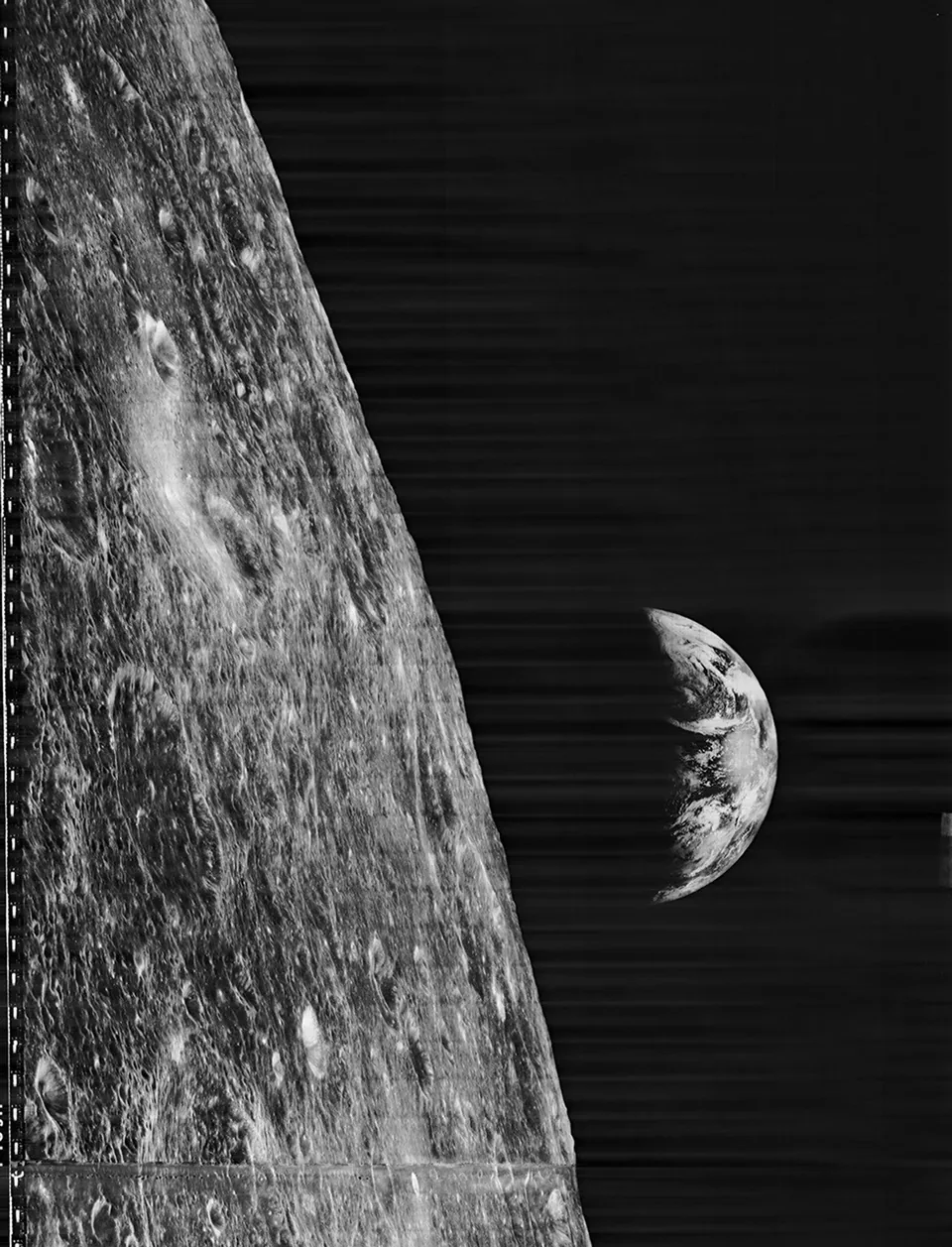
صورة حقيقية: افصل الملف والتعليق وتاريخ الصفحة
تعرّف صفحة NASA لهذه الصورة «Earthrise» المركبة بأنها Lunar Orbiter 1 وتنسب الصورة إلى NASA. تاريخ الصفحة لا يثبت تاريخ الالتقاط، كما أن العنوان وحده لا يحدد المهمة.
تحقّق من ادعاء محدد بالرجوع إلى الصفحة المؤسسية. احفظ المرجع وسجّل تغييرات العرض. تعرّف البصمة الرقمية نسخة بعينها، لكنها لا تثبت صحة المشهد أو تفسيره.
المؤشرات والأدلة
| المؤشر | التفسير | الدليل المطلوب |
|---|---|---|
| الملف | النسخة التي فُحصت | المرجع وتاريخ الاطلاع والبصمة |
| التعليق | النسبة التي ينشرها المصدر | مطابقة المهمة والائتمان مع الصفحة |
| الحقوق | شروط إعادة الاستخدام تختلف عن الأصالة | إرشادات NASA والائتمان وتغيير الحجم |
مثال عملي افتراضي
حالة توضيحية
تدّعي صورة انتشرت على نطاق واسع أنها تُظهر حدثًا حديثًا. يبحث الفريق عن أقدم منشور، ويقارن المواقع الظاهرة، ويقرأ بيانات المصدر الوصفية إن وُجدت.
القرار والأدلة المتوقعة
تُفرّق الملاحظة بين ما يشهد عليه المصدر التقني، وما تؤكده المصادر المستقلة، وما لا يمكن استنتاجه بعد.
مؤشرات الإدارة
| المؤشر | ما يقيسه | الإجراء الأول |
|---|---|---|
| المصدر | العناصر المرتبطة بأصل موثق | التعامل مع الأدلة الحاسمة دون وجود مصدر أولًا |
| التأييد | الاستنتاجات المدعومة بأدلة مستقلة | إزالة التكرار الدائري |
| تأخير التصحيح | الوقت من اكتشاف الخطأ إلى تحديث المحتوى | الحفاظ على قائمة الصفحات التابعة |
| المجهولات المرئية | القيود المهمة المذكورة صراحةً | منع تحول الفرضية إلى حقيقة |
الأخطاء الشائعة
- اعتبار بيانات EXIF المفقودة دليلًا على التلفيق
- التوقف بعد بحث عكسي فارغ
- احتساب إعادة النشر كمصادر مستقلة
- تصحيح صفحة واحدة دون نسخها
الأسئلة المتكررة
هل تثبت البيانات الوصفية أصالة الصورة؟
لا. يمكن إزالتها أو تغييرها أو توريثها من جهاز. ادعمها بالمحتوى والسياق والمصدر.
كيف ينبغي التعامل مع المحتوى المُصنّع؟
ابحث عن معلومات المصدر المتاحة، وافحص الاتساق والسياق، ثم قيّم صحة الادعاء المرتبط به.
هل يجب حذف الخطأ؟
صحّح المحتوى وتوزيعه بوضوح. عندما يكون قد أثّر بالفعل على القراء، فإنّ إضافة ملاحظة مؤرّخة تشرح التغيير أفضل من الاختفاء الصامت.
المراجع: البيانات والاستخدامات والحدود
تاريخ مراجعة الوثائق .
الملاحظات المرجعية المفصّلة متاحة باللغة الإنجليزية في هذه النسخة.
| المصدر والغرض | بيانات أو معيار متحقق منه | كيفية الاستخدام | حدود يجب مراعاتها |
|---|---|---|---|
| FIRST · Traffic Light Protocol Indicate who may receive redistributed information. |
TLP 2.0 uses RED, AMBER, GREEN and CLEAR; AMBER+STRICT restricts sharing to the recipient organisation. Labels must not be translated. | Keep the marking with the information and check recipients before forwarding. Ask the source to clarify any ambiguity. | TLP is neither a formal classification nor a reuse licence. It does not guarantee content accuracy. |
| C2PA · Content Credentials Describe and verify certain content provenance information. |
C2PA specification 2.4 defines manifests, assertions and cryptographic binding mechanisms associated with media. | Examine what the manifest asserts, who signed it and whether validation succeeds. Test preservation after transformations and distribution. | Validated provenance does not establish the truth of a scene. Absence of a manifest does not demonstrate a fake. |
منشأ الوسائط والتحقق وفق C2PA
الملاحظات المرجعية المفصّلة متاحة باللغة الإنجليزية في هذه النسخة.
A provenance report combines findings with different scopes. Signature, credential trust, content binding and scene context are separate assurances. Retain the exact asset and full report before summarising a result.
References use C2PA 2.4, dated April 2026 in its version history. This explorer explains twelve selected codes; it validates no file, retrieves no manifest and detects no AI-generated image. Cases are fictional and proposed checks are editorial guidance.
References consulted on .
Read twelve C2PA codes without overinterpreting them
The groups below are those used by the specification: success, informational and failure. A success code describes its particular check rather than replacing full validation. Missing information and a failed check cannot be reduced to a fake label.
| Code and group in C2PA 2.4 | Reported finding | Proposed follow-up | Conclusion to avoid |
|---|---|---|---|
claimSignature.validatedSuccess · success | The claim signature validated. | Also inspect trust, validity period and binding to the relevant asset. | The whole scene is true or every validation check is complete. |
signingCredential.trustedSuccess · success | The validator recognises the signing credential as trusted. | Record the trust list, its version and applied policy. | A signer’s name alone confirms the depicted event. |
timeStamp.validatedSuccess · success | The time-stamp token passes the checks described in the specification. | Distinguish it from capture time and inspect trust in the time-stamping authority. | The attested time necessarily dates the photographed scene. |
assertion.dataHash.matchSuccess · success | The data-hash binding matches within the checked scope. | Inspect the assertion, excluded ranges and any other applicable bindings. | Every byte and every metadata field is covered without exception. |
signingCredential.ocsp.inaccessibleInformation · informational | An online OCSP check was attempted without a response. | Retain network conditions and distinguish no response from a returned status. | The certificate is revoked, or certainly not revoked. |
signingCredential.ocsp.unknownInformation · informational | The OCSP response reports unknown for the signing credential. | Read the report and the policy used to handle that status. | Unknown means good or revoked. |
ingredient.unknownProvenanceInformation · informational | The relevant ingredient has no C2PA manifest. | Identify that ingredient and what its history actually makes available. | All ingredients were verified or that ingredient must be fake. |
assertion.dataHash.additionalExclusionsPresentInformation · informational | The binding excludes ranges beyond the C2PA Manifest Store. | Identify the excluded regions and their relevance to the claim being examined. | A hash success automatically protects excluded metadata. |
claimSignature.mismatchFailure · failure | Claim signature verification fails. | Retain asset, manifest and report; compare with the available source copy. | The cause of failure or somebody’s intent is already established. |
signingCredential.untrustedFailure · failure | The credential appears on none of the validator’s applicable trust lists. | Check policy and lists; distinguish this from a mathematically incorrect signature. | The file must be fabricated or its signature must be mathematically invalid. |
assertion.dataHash.mismatchFailure · failure | An asset byte range does not match the hash declared in the assertion. | Identify the checked copy and its transformations before explaining the difference. | Every difference establishes intentional falsification of the scene. |
signingCredential.ocsp.revokedFailure · failure | The OCSP response indicates revocation under the applied check. | Read the temporal evidence and validation procedure behind the result. | A summary detached from its date and report establishes the status of every copy. |
No code matches the filters.
Four version details useful to editorial and technical teams
- Published version
- The examples above follow C2PA 2.4, published in April 2026. Version 2.5, published in October 2026, expands support for asset formats and live media. Record your validator version and check the status-code table for the corresponding edition before interpreting a result.
- specVersion
- In this version the recommended field belongs in claim_generator_info. It is informational; validators should not change logic solely because of its value.
- crJSON
- This JSON-LD representation is a derived view of C2PA data for reporting and interoperability. It is not independently verifiable or a validation input format.
- c2pa.ai-disclosure
- The assertion carries an AI transparency declaration. It is not a universal detector, and its absence does not prove human origin.
Six fictional situations for a publication decision
| Fictional situation | Concrete check | Decision proportionate to evidence |
|---|---|---|
| A signed photo receives a new caption | Match the asset and report against the scene, date and location claimed by the new caption. | Describe checked provenance and leave the event attribution unresolved if uncorroborated. |
| A resized variant no longer matches the old binding | Compare original, transformation tool, distributed variant and manifest associated with each. | Handle the validation break without inferring malicious manipulation from the hash code alone. |
| Two validators do not trust the same signer | Record versions, trust lists and policy, then compare other findings. | Explain the trust-policy difference rather than treating it as contradictory truths about the scene. |
| A screenshot no longer presents a Content Credential | Seek the earlier asset and document the known copy chain. | Retain the screenshot’s status and incomplete history; an absent manifest does not establish a fake. |
| A binding success accompanies excluded metadata | Identify excluded fields or ranges and caption claims depending on them. | Limit the conclusion to covered data and verify decisive fields another way. |
| A supplier sends only a crJSON report | Request the asset and provenance data needed for verification, plus tool version and policy. | Examine the report without claiming to have repeated cryptographic validation. |
Retain a usable verification record
- Exact object
- Examined asset or stream, known origin, copy and transformations.
- Tool and policy
- Validator, version, configuration and relevant trust lists.
- Complete findings
- Codes, relevant object, explanations and time evidence; keep inconclusive information as well.
- Examined claim
- Exact statement about location, date, creator or AI use and its source.
- Editorial decision
- What is established, what is missing and what could change the conclusion.
Examine information origins and repetitions →
Primary sources and limits of this reader
This is not an exhaustive C2PA code inventory. Full procedures, formats and trust policies remain those of the specification and your validator. Diagrams, cases and records are CIE teaching proposals.
- C2PA · Content Credentials Technical Specification 2.4 · 2.4 · April 2026 ·
§5.3.1; §14.3; §15.2; §15.7–15.12 - C2PA · Content Credentials Technical Specification 2.5 · 2.5 · October 2026 ·
Appendix D and Appendix F.1 - C2PA · Content Credentials Explainer · 2.4
§2; §7.2–7.4 - C2PA · Security Considerations · 2.4
§2.2–2.6; §4; §5
مؤشرات STIX والمشاركة وفق TLP
الملاحظات المرجعية المفصّلة متاحة باللغة الإنجليزية في هذه النسخة.
Check TLP scope before publishing an excerpt
A traceable note does not by itself grant permission to redistribute it. TLP markings, additional restrictions and intended recipients must accompany a redaction or publication decision.
- AMBER+STRICT limits sharing to the organisation; AMBER’s scope for protecting clients does not apply by default.
- GREEN excludes public channels; CLEAR does not remove copyright rules or separate restrictions.
- Check the marking of each quoted field and obtain explicit source permission if the intended sharing exceeds the received scope.
Read the STIX, observations and TLP sharing reference →
Sources checked on · FIRST · TLP 2.0
OSINT: حفظ الأدلة
الملاحظات المرجعية المفصّلة متاحة باللغة الإنجليزية في هذه النسخة.
Claimed provenance and preservation answer different questions
An edit history or manifest does not replace collection context. Preservation connects objects actually received, copies created and documented handling actions.
- Separate binary integrity, source identity and an assertion’s truthfulness.
- Keep derivative versions with their own identifiers and references.
- Document missing material before reaching a trust conclusion.
See copy lineage and the eight preservation cases →
Sources reviewed on · NIST · Digital Evidence Preservation · NIST IR 8387 · Full report · NIST · SP 800-86 · NIST SP 800-86 · Full report · NIST · FIPS 180-4 · Secure Hash Standard
PDF: التنقيح والمشاركة
الملاحظات المرجعية المفصّلة متاحة باللغة الإنجليزية في هذه النسخة.
A documented transformation still needs release review
Derivative lineage explains technical provenance; it does not prove all excluded information was removed. Visible, hidden and embedded surfaces still need checking.
- Separate pending marks, applied redaction and hidden-data sanitization.
- Check a positive control before interpreting a negative search.
- Bind the decision to the delivered version and its recipients.
See surfaces and the pre-sharing review matrix →
Sources reviewed on · Adobe · Redacting and sanitizing PDFs · Adobe · Redact sensitive content · Adobe · Sanitize PDFs · ICO · Avoid accidental breaches when redacting · ICO · Hidden information in documents · Microsoft · Document Inspector
سلاسل الاقتباس والرصد الاجتماعي
الملاحظات المرجعية المفصّلة متاحة باللغة الإنجليزية في هذه النسخة.
Separate origin, repost and corroboration
A capture or provenance signature may document a record without proving its claim. Before citing multiple publications, check whether they reference the same document.
- Keep the consulted version and its exact reference.
- Name missing citations instead of assuming their contents.
- Treat distinct documents as records to compare, without assuming independence.
Read the method and explore citation chains →
Government Communications · RESIST 3 · RESIST 3 · 2025 · consulted 2026-10-23
Government Communications · RESIST 3 quick reference · RESIST 3 · 2025 · consulted 2026-10-23
المراجع الرسمية
تدعم المراجع الطريقة. قم بتكييف عمليات التحقق مع سياقك؛ فهي ليست شهادة. قد تكون عناوين المراجع الأصلية والوثائق المصدرية بلغة أخرى.
تاريخ مراجعة المراجع .
- C2PA — Content Credentials Technical Specification 2.5
- UC Berkeley / OHCHR — Berkeley Protocol on Digital Open Source Investigations
- FIRST · Traffic Light Protocol
- C2PA · Content Credentials
- C2PA · Content Credentials Explainer
- C2PA · Security Considerations
- NIST · Digital Evidence Preservation
- NIST IR 8387 · Full report
- NIST · SP 800-86
- NIST SP 800-86 · Full report
- NIST · FIPS 180-4 · Secure Hash Standard
- Adobe · Redacting and sanitizing PDFs
- Adobe · Redact sensitive content
- Adobe · Sanitize PDFs
- ICO · Avoid accidental breaches when redacting
- ICO · Hidden information in documents
- Microsoft · Document Inspector
- Government Communications · RESIST 3
- Government Communications · RESIST 3 quick reference