Ressourcen · 10
Informationsintegrität: Herkunft, Kontext und Transformationen überprüfen
Ein Verfahren zur Qualifizierung eines Dokuments, Bildes oder Videos vor der Zitierung, Weitergabe oder Verwendung in einer Entscheidung.
Aktualisiert · 8 min

Wozu dieser Leitfaden beiträgt
- Finden Sie die früheste verfügbare Version
- Trennen Sie eine echte Datei von einer falschen Beschriftung
- Dokumenttransformationen
- Korrigieren, ohne die Spur zu löschen
Kurzcheck
- Wer hat die Datei veröffentlicht und woher hat er sie?
- Gibt es eine frühere Version?
- Sind Standort und Licht kompatibel?
- Sind Metadaten konsistent, werden aber nicht als ausreichend behandelt?
- Welcher Inhalt hängt von dieser Evidenz ab?
Schritt-für-Schritt-Anleitung
- 1
Bewahren Sie den Artikel auf
Behalten Sie die URL, das Zugriffsdatum, die empfangene Datei, den sichtbaren Kontext und einen Hash bei, sofern dies zulässig ist. Arbeiten Sie an einer Kopie und protokollieren Sie jede Konvertierung.
Lieferbar: Protokolleintrag und Hash.
- 2
Provenienz nachverfolgen.
Suchen Sie nach der frühesten Veröffentlichung, dem beanspruchten Ersteller, zwischengeschalteten Weiterleitungen und allen beschnittenen oder neu komprimierten Versionen.
Liefergegenstand: Herkunftskette.
- 3
Inhalt und Kontext prüfen
Vergleichen Sie Gelände, Gebäude, Wetter, Schatten, Sprache, Chronologie und bekannte Ereignisse. Ein echtes Bild kann mit einem falschen Ort oder Datum wiederverwendet werden.
Liefergegenstand: bestätigte und abgelehnte Hypothesen.
- 4
Metadaten prüfen
Verwenden Sie EXIF, Kodierung, Abmessungen und Verlauf als Anhaltspunkte. Ihre Anwesenheit oder Abwesenheit beweist niemals allein die Authentizität.
Liefergegenstand: interpretierte technische Aufzeichnung.
- 5
Unabhängig bestätigen
Finden Sie eine Primärquelle, einen anderen Blickwinkel, eine offizielle Aufzeichnung oder einen unabhängigen Zeugen. Identifizieren Sie Wiederholungen, die alle von derselben Datei abhängen.
Ergebnis: Bestätigungsmatrix
- 6
Veröffentlichen und korrigieren
Geben Sie Vertrauen, Einschränkungen, Methode und Quelle an. Wenn sich die Schlussfolgerung ändert, aktualisieren Sie die verlinkten Seiten und bewahren Sie einen datierten Korrekturvermerk auf.
Liefergegenstand: Redaktionelles Entscheidungs- und Korrekturregister.
Verstehen, berechnen und entscheiden
Echtes Foto: Datei, Bildunterschrift und Seitendatum trennen
Die NASA-Seite zu diesem „Earthrise“-Bild nennt Lunar Orbiter 1 und NASA als Quelle. Das Seitendatum beweist kein Aufnahmedatum. Auch der Bildtitel allein identifiziert keine Mission.
Prüfen Sie eine konkrete Behauptung anhand der institutionellen Originalseite. Bewahren Sie den Verweis auf und dokumentieren Sie Darstellungsänderungen. Ein Hash identifiziert eine Kopie, beweist aber weder die Szene noch ihre Deutung.
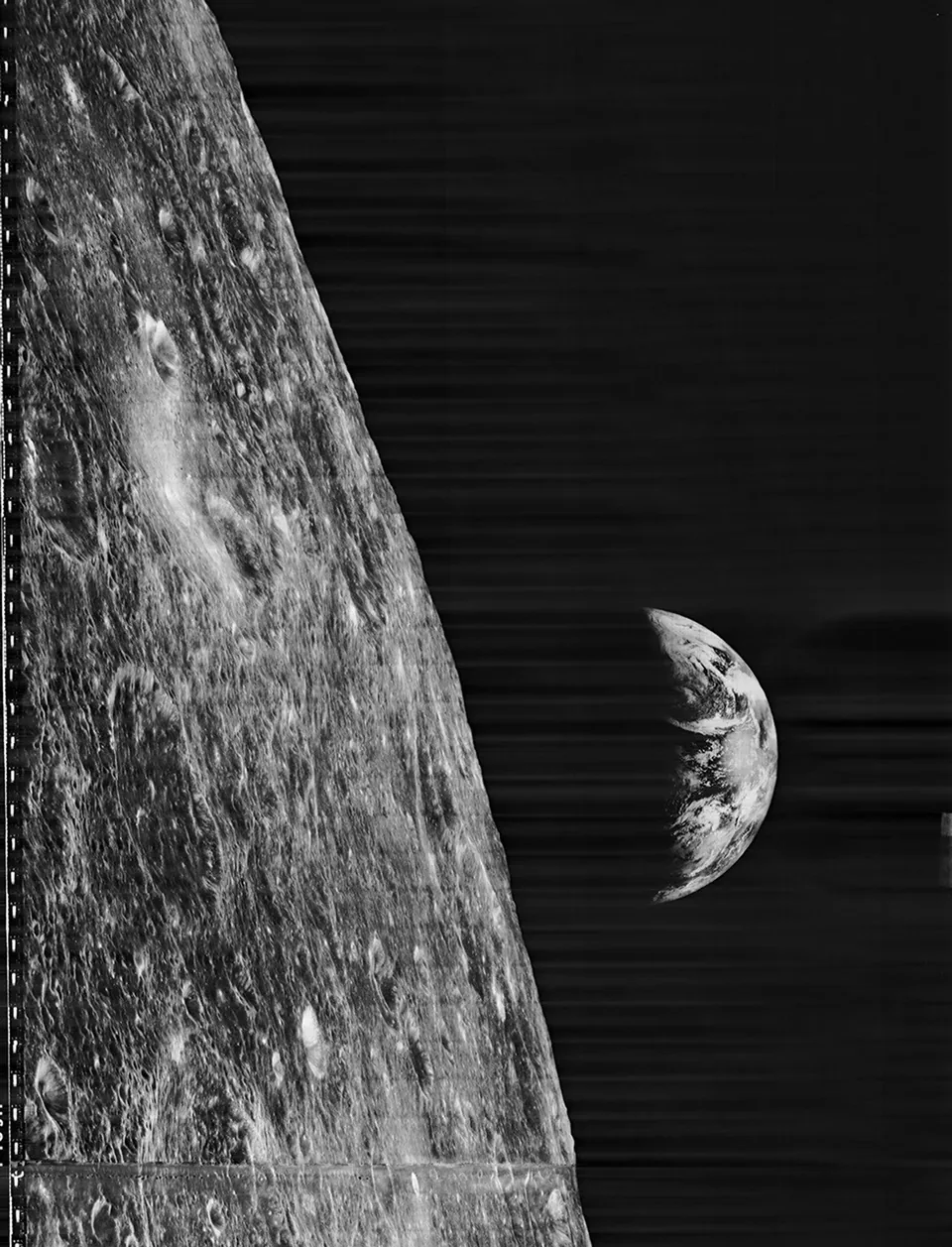
Kennwerte und Nachweise
| Kennwert | Einordnung | Erforderlicher Nachweis |
|---|---|---|
| Datei | Die untersuchte Kopie | Referenz, Abrufdatum und Hash |
| Bildunterschrift | Von der Quelle veröffentlichte Zuordnung | Mission und Bildnachweis mit der Seite abgleichen |
| Nutzung | Nutzungsbedingungen sind keine Echtheitsprüfung | NASA-Regeln, Bildnachweis und Größenänderung |
Fiktives Arbeitsbeispiel
Beispielhafte Situation
Ein virales Bild soll ein aktuelles Ereignis zeigen. Das Team sucht nach der frühesten Veröffentlichung, vergleicht sichtbare Standorte und liest, falls vorhanden, Provenienzmetadaten.
Entscheidung und erwartete Beweise
Der Hinweis trennt, was die technische Provenienz bezeugt, was unabhängige Quellen bestätigen und was noch nicht abgeschlossen werden kann.
Managementindikatoren
| Indikator | Was es misst | Erste Aktion |
|---|---|---|
| Provenienz | Gegenstände, die mit einer dokumentierten Herkunft verbunden sind | Behandeln Sie entscheidende Beweise zunächst ohne Quellenangabe |
| Bestätigung | Schlussfolgerungen, die durch unabhängige Hinweise gestützt werden | Zirkuläre Wiederholung entfernen |
| Korrekturverzögerung | Zeit von der Entdeckung eines Fehlers bis zur Aktualisierung des Inhalts | Pflegen Sie die Liste der abhängigen Seiten |
| Sichtbare Unbekannte | Wichtige Einschränkungen ausdrücklich aufgeführt | Verhindern Sie, dass eine Hypothese zur Tatsache wird |
Häufige Fallstricke
- Fehlendes EXIF wird als Beweis einer Fabrikation behandelt
- Stoppen nach einer leeren Rückwärtssuche
- Zählung von Wiederveröffentlichungen als unabhängige Quellen
- Korrektur einer Seite, aber nicht ihrer Kopien
Häufig gestellte Fragen
Beweisen Metadaten die Echtheit eines Bildes?
Nein. Sie können von einem Gerät entfernt, verändert oder vererbt werden. Untermauern Sie sie mit Inhalt, Kontext und Herkunft.
Wie soll mit synthetischen Inhalten umgegangen werden?
Suchen Sie nach verfügbaren Herkunftsinformationen, prüfen Sie Konsistenz und Kontext und beurteilen Sie dann den Wahrheitsgehalt der zugehörigen Behauptung.
Soll ein Fehler gelöscht werden?
Korrigieren Sie den Inhalt und seine Verbreitung klar. Wenn es die Leser bereits beeinflusst hat, erklärt eine datierte Notiz die Änderung besser als ein stilles Verschwinden.
Referenzen: Daten, Nutzung und Grenzen
Dokumentation geprüft am .
Ausführliche Hinweise stehen in dieser Ausgabe auf Englisch zur Verfügung.
| Quelle und Zweck | Geprüfte Daten oder Richtwerte | Praktische Nutzung | Zu beachtende Grenze |
|---|---|---|---|
| FIRST · Traffic Light Protocol Indicate who may receive redistributed information. |
TLP 2.0 uses RED, AMBER, GREEN and CLEAR; AMBER+STRICT restricts sharing to the recipient organisation. Labels must not be translated. | Keep the marking with the information and check recipients before forwarding. Ask the source to clarify any ambiguity. | TLP is neither a formal classification nor a reuse licence. It does not guarantee content accuracy. |
| C2PA · Content Credentials Describe and verify certain content provenance information. |
C2PA specification 2.4 defines manifests, assertions and cryptographic binding mechanisms associated with media. | Examine what the manifest asserts, who signed it and whether validation succeeds. Test preservation after transformations and distribution. | Validated provenance does not establish the truth of a scene. Absence of a manifest does not demonstrate a fake. |
Medienherkunft und C2PA-Validierung
Ausführliche Hinweise stehen in dieser Ausgabe auf Englisch zur Verfügung.
A provenance report combines findings with different scopes. Signature, credential trust, content binding and scene context are separate assurances. Retain the exact asset and full report before summarising a result.
References use C2PA 2.4, dated April 2026 in its version history. This explorer explains twelve selected codes; it validates no file, retrieves no manifest and detects no AI-generated image. Cases are fictional and proposed checks are editorial guidance.
References consulted on .
Read twelve C2PA codes without overinterpreting them
The groups below are those used by the specification: success, informational and failure. A success code describes its particular check rather than replacing full validation. Missing information and a failed check cannot be reduced to a fake label.
| Code and group in C2PA 2.4 | Reported finding | Proposed follow-up | Conclusion to avoid |
|---|---|---|---|
claimSignature.validatedSuccess · success | The claim signature validated. | Also inspect trust, validity period and binding to the relevant asset. | The whole scene is true or every validation check is complete. |
signingCredential.trustedSuccess · success | The validator recognises the signing credential as trusted. | Record the trust list, its version and applied policy. | A signer’s name alone confirms the depicted event. |
timeStamp.validatedSuccess · success | The time-stamp token passes the checks described in the specification. | Distinguish it from capture time and inspect trust in the time-stamping authority. | The attested time necessarily dates the photographed scene. |
assertion.dataHash.matchSuccess · success | The data-hash binding matches within the checked scope. | Inspect the assertion, excluded ranges and any other applicable bindings. | Every byte and every metadata field is covered without exception. |
signingCredential.ocsp.inaccessibleInformation · informational | An online OCSP check was attempted without a response. | Retain network conditions and distinguish no response from a returned status. | The certificate is revoked, or certainly not revoked. |
signingCredential.ocsp.unknownInformation · informational | The OCSP response reports unknown for the signing credential. | Read the report and the policy used to handle that status. | Unknown means good or revoked. |
ingredient.unknownProvenanceInformation · informational | The relevant ingredient has no C2PA manifest. | Identify that ingredient and what its history actually makes available. | All ingredients were verified or that ingredient must be fake. |
assertion.dataHash.additionalExclusionsPresentInformation · informational | The binding excludes ranges beyond the C2PA Manifest Store. | Identify the excluded regions and their relevance to the claim being examined. | A hash success automatically protects excluded metadata. |
claimSignature.mismatchFailure · failure | Claim signature verification fails. | Retain asset, manifest and report; compare with the available source copy. | The cause of failure or somebody’s intent is already established. |
signingCredential.untrustedFailure · failure | The credential appears on none of the validator’s applicable trust lists. | Check policy and lists; distinguish this from a mathematically incorrect signature. | The file must be fabricated or its signature must be mathematically invalid. |
assertion.dataHash.mismatchFailure · failure | An asset byte range does not match the hash declared in the assertion. | Identify the checked copy and its transformations before explaining the difference. | Every difference establishes intentional falsification of the scene. |
signingCredential.ocsp.revokedFailure · failure | The OCSP response indicates revocation under the applied check. | Read the temporal evidence and validation procedure behind the result. | A summary detached from its date and report establishes the status of every copy. |
No code matches the filters.
Four version details useful to editorial and technical teams
- Published version
- The examples above follow C2PA 2.4, published in April 2026. Version 2.5, published in October 2026, expands support for asset formats and live media. Record your validator version and check the status-code table for the corresponding edition before interpreting a result.
- specVersion
- In this version the recommended field belongs in claim_generator_info. It is informational; validators should not change logic solely because of its value.
- crJSON
- This JSON-LD representation is a derived view of C2PA data for reporting and interoperability. It is not independently verifiable or a validation input format.
- c2pa.ai-disclosure
- The assertion carries an AI transparency declaration. It is not a universal detector, and its absence does not prove human origin.
Six fictional situations for a publication decision
| Fictional situation | Concrete check | Decision proportionate to evidence |
|---|---|---|
| A signed photo receives a new caption | Match the asset and report against the scene, date and location claimed by the new caption. | Describe checked provenance and leave the event attribution unresolved if uncorroborated. |
| A resized variant no longer matches the old binding | Compare original, transformation tool, distributed variant and manifest associated with each. | Handle the validation break without inferring malicious manipulation from the hash code alone. |
| Two validators do not trust the same signer | Record versions, trust lists and policy, then compare other findings. | Explain the trust-policy difference rather than treating it as contradictory truths about the scene. |
| A screenshot no longer presents a Content Credential | Seek the earlier asset and document the known copy chain. | Retain the screenshot’s status and incomplete history; an absent manifest does not establish a fake. |
| A binding success accompanies excluded metadata | Identify excluded fields or ranges and caption claims depending on them. | Limit the conclusion to covered data and verify decisive fields another way. |
| A supplier sends only a crJSON report | Request the asset and provenance data needed for verification, plus tool version and policy. | Examine the report without claiming to have repeated cryptographic validation. |
Retain a usable verification record
- Exact object
- Examined asset or stream, known origin, copy and transformations.
- Tool and policy
- Validator, version, configuration and relevant trust lists.
- Complete findings
- Codes, relevant object, explanations and time evidence; keep inconclusive information as well.
- Examined claim
- Exact statement about location, date, creator or AI use and its source.
- Editorial decision
- What is established, what is missing and what could change the conclusion.
Examine information origins and repetitions →
Primary sources and limits of this reader
This is not an exhaustive C2PA code inventory. Full procedures, formats and trust policies remain those of the specification and your validator. Diagrams, cases and records are CIE teaching proposals.
- C2PA · Content Credentials Technical Specification 2.4 · 2.4 · April 2026 ·
§5.3.1; §14.3; §15.2; §15.7–15.12 - C2PA · Content Credentials Technical Specification 2.5 · 2.5 · October 2026 ·
Appendix D and Appendix F.1 - C2PA · Content Credentials Explainer · 2.4
§2; §7.2–7.4 - C2PA · Security Considerations · 2.4
§2.2–2.6; §4; §5
STIX-Indikatoren und TLP
Ausführliche Hinweise stehen in dieser Ausgabe auf Englisch zur Verfügung.
Check TLP scope before publishing an excerpt
A traceable note does not by itself grant permission to redistribute it. TLP markings, additional restrictions and intended recipients must accompany a redaction or publication decision.
- AMBER+STRICT limits sharing to the organisation; AMBER’s scope for protecting clients does not apply by default.
- GREEN excludes public channels; CLEAR does not remove copyright rules or separate restrictions.
- Check the marking of each quoted field and obtain explicit source permission if the intended sharing exceeds the received scope.
Read the STIX, observations and TLP sharing reference →
Sources checked on · FIRST · TLP 2.0
OSINT: Beweise sichern
Ausführliche Hinweise stehen in dieser Ausgabe auf Englisch zur Verfügung.
Claimed provenance and preservation answer different questions
An edit history or manifest does not replace collection context. Preservation connects objects actually received, copies created and documented handling actions.
- Separate binary integrity, source identity and an assertion’s truthfulness.
- Keep derivative versions with their own identifiers and references.
- Document missing material before reaching a trust conclusion.
See copy lineage and the eight preservation cases →
Sources reviewed on · NIST · Digital Evidence Preservation · NIST IR 8387 · Full report · NIST · SP 800-86 · NIST SP 800-86 · Full report · NIST · FIPS 180-4 · Secure Hash Standard
PDF: Schwärzen und Freigeben
Ausführliche Hinweise stehen in dieser Ausgabe auf Englisch zur Verfügung.
A documented transformation still needs release review
Derivative lineage explains technical provenance; it does not prove all excluded information was removed. Visible, hidden and embedded surfaces still need checking.
- Separate pending marks, applied redaction and hidden-data sanitization.
- Check a positive control before interpreting a negative search.
- Bind the decision to the delivered version and its recipients.
See surfaces and the pre-sharing review matrix →
Sources reviewed on · Adobe · Redacting and sanitizing PDFs · Adobe · Redact sensitive content · Adobe · Sanitize PDFs · ICO · Avoid accidental breaches when redacting · ICO · Hidden information in documents · Microsoft · Document Inspector
Zitatketten und Social Listening
Ausführliche Hinweise stehen in dieser Ausgabe auf Englisch zur Verfügung.
Separate origin, repost and corroboration
A capture or provenance signature may document a record without proving its claim. Before citing multiple publications, check whether they reference the same document.
- Keep the consulted version and its exact reference.
- Name missing citations instead of assuming their contents.
- Treat distinct documents as records to compare, without assuming independence.
Read the method and explore citation chains →
Government Communications · RESIST 3 · RESIST 3 · 2025 · consulted 2026-10-23
Government Communications · RESIST 3 quick reference · RESIST 3 · 2025 · consulted 2026-10-23
Offizielle Referenzen
Die Referenzen unterstützen die Methode. Passen Sie die Prüfungen an Ihren Kontext an; sie stellen keine Zertifizierung dar. Originalreferenztitel und Quelldokumente können in einer anderen Sprache verfasst sein.
Referenzen geprüft am .
- C2PA — Content Credentials Technical Specification 2.5
- UC Berkeley / OHCHR — Berkeley Protocol on Digital Open Source Investigations
- FIRST · Traffic Light Protocol
- C2PA · Content Credentials
- C2PA · Content Credentials Explainer
- C2PA · Security Considerations
- NIST · Digital Evidence Preservation
- NIST IR 8387 · Full report
- NIST · SP 800-86
- NIST SP 800-86 · Full report
- NIST · FIPS 180-4 · Secure Hash Standard
- Adobe · Redacting and sanitizing PDFs
- Adobe · Redact sensitive content
- Adobe · Sanitize PDFs
- ICO · Avoid accidental breaches when redacting
- ICO · Hidden information in documents
- Microsoft · Document Inspector
- Government Communications · RESIST 3
- Government Communications · RESIST 3 quick reference