Resources · 60
Influencer campaigns: connect deliverables, evidence and measurement
Prepare a verifiable brief, inspect published content and distinguish attributed sales, margin and effects actually demonstrated.
· 3 min
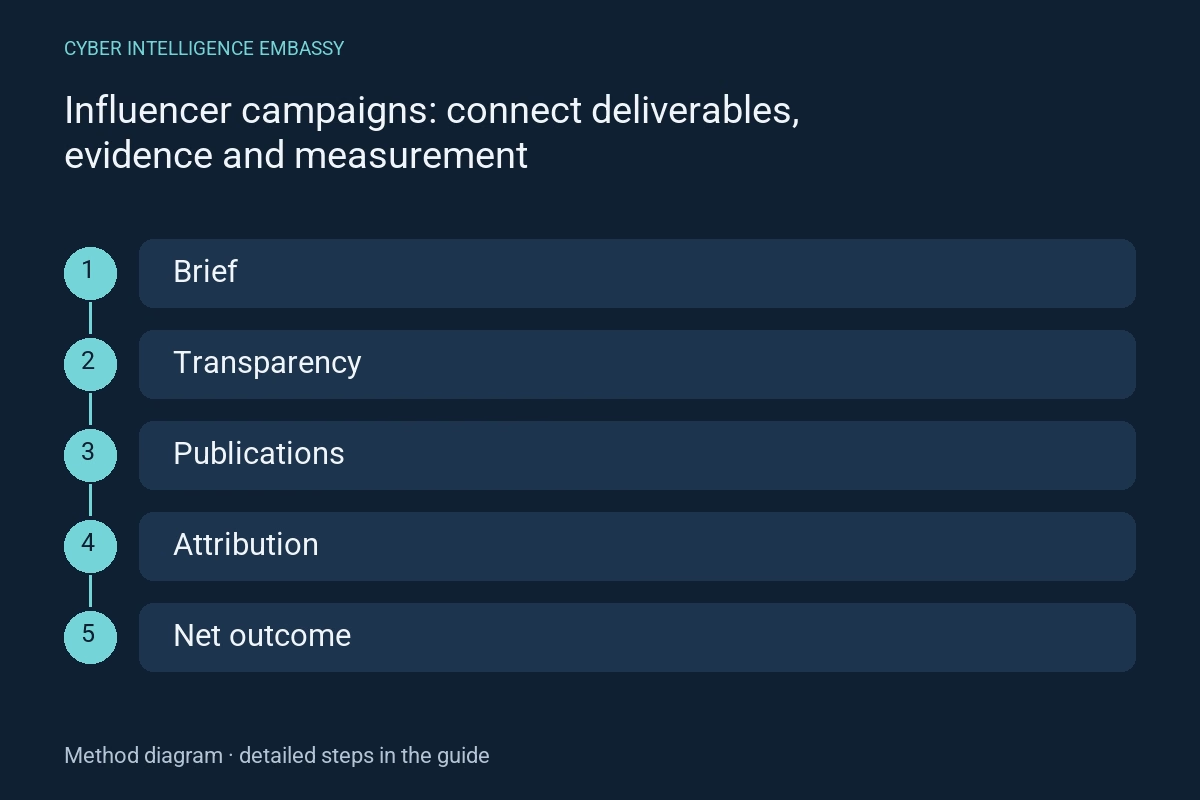
What this guide helps achieve
- Set the intended result
- Prepare transparency
- Track publications
- Read attribution cautiously
Quick check
- Is a good engagement rate sufficient?
- Do gifts count for disclosure?
- Which ROI can be compared across creators?
Step-by-step method
- 01
Set the intended result
Define audience, useful content and desired task. Views, registrations and sales are different outcomes. Decide included costs and the reporting period before publication.
Deliverable: brief and assessment criteria.
- 02
Prepare transparency
For a French audience, the ministry source requires clear, readable commercial intent for compensated promotions, including benefits in kind, and identification of the advertiser. Check product-specific and market-specific rules before approval.
Deliverable: message and disclosure review.
- 03
Track publications
Keep approved version, URL, date, format and publication evidence. Separate content reuse permission from permission to publish on a creator’s account. Record edits made after approval.
Deliverable: deliverables and usage-rights register.
- 04
Read attribution cautiously
A code may spread beyond the audience; a link may be seen without a measured click. Compare sources, windows, cancellations and duplicates. Sales attributed under a rule are not automatically sales caused by the campaign.
Deliverable: attribution method and exclusions.
- 05
Decide on net outcomes
Show creation, compensation, gifts and amplification costs within your stated scope. Separate revenue, margin and calculated return. To estimate incrementality, plan a suitable comparison instead of labelling a code summary causal.
Deliverable: reasoned report and renewal decision.
Reusable worksheet
Complete with your authorised observations. These fields are a working template, not observed results.
| Field | Information to record |
|---|---|
| Objective | Audience, task and criterion |
| Publication | URL, format, date and approved version |
| Measurement | Source, window, code and exclusions |
| Economics | Costs, cancellations, margin and limits |
Worked example
Illustrative situation
Fictional example: a creator code appears on a discount site while the video produces few tracked clicks.
Decision and expected evidence
The report separates code-associated orders from observed journeys and does not describe every order as a demonstrated creator effect.
Distinguish the mechanisms
| Mechanism | Purpose | Check or limitation |
|---|---|---|
| Promotion code | Identify associated orders | Explain redistribution and use outside the audience |
| Campaign link | Identify a measured journey | Name unobserved visits and conversions |
| Control comparison | Study incremental effects | Document recruitment and group differences |
Management indicators
| Indicator | What it measures | First action |
|---|---|---|
| Accepted deliverables | Published items satisfying the reviewed brief | Keep URL, date and discrepancy reasons |
| Net attributed orders | Orders after explicit exclusions | Deduplicate and handle cancellations |
| Margin after campaign cost | Chosen economic scope | Do not confuse margin with gross revenue |
Common pitfalls
- Explain redistribution and use outside the audience
- Name unobserved visits and conversions
- Document recruitment and group differences
Frequently asked questions
Is a good engagement rate sufficient?
It describes interactions under a denominator. It establishes neither audience relevance nor incremental sales.
Do gifts count for disclosure?
The French ministry guide includes benefits in kind among commercial influence compensation. Review the applicable context.
Which ROI can be compared across creators?
A shared formula and period with the same costs, refunds and attribution rules; otherwise comparison is misleading.
Official references
References consulted on 2 October 2026. The method and worksheet propose checks to adapt to your context; they do not constitute certification.
Continue exploring