Resources · 51
Campaign links and UTMs: keep measurement coherent
Connect published links to known campaigns, test redirects and interpret visits without claiming complete attribution.
· 3 min
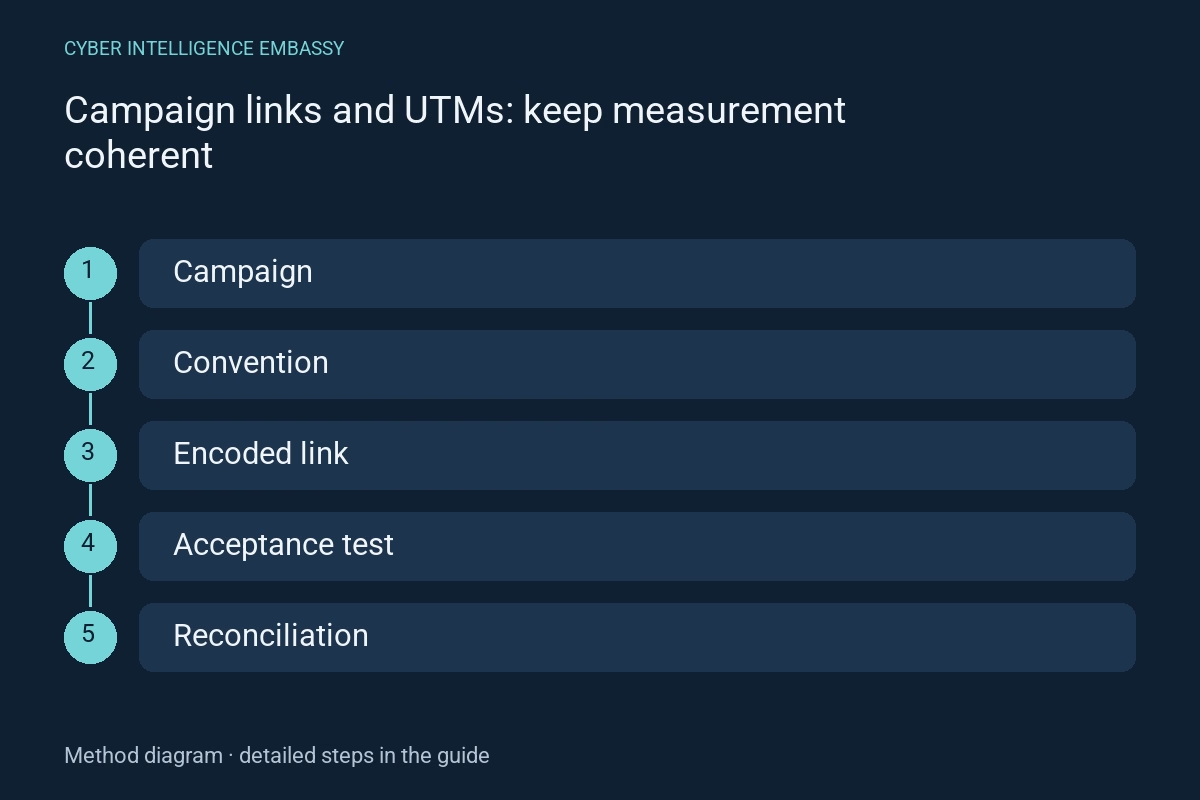
What this guide helps achieve
- Stabilise conventions
- Connect distribution to destinations
- Test the whole journey
- Document unattributed visits
Quick check
- Is the campaign identifier stable?
- Do values follow the agreed case?
- Does a shortener remove parameters?
- Does the destination fulfil the promise?
- Does the link contain personal information?
Step-by-step method
- 01
Define the register
Give campaigns an identifier, owner, period and destination. Separate readable name, channel, medium and creative variant; a naming change should not inadvertently create another campaign.
Deliverable: register and dictionary.
- 02
Normalise values
Google Analytics treats UTM values as case-sensitive. Agree consistent source, medium and campaign values and when to include identifier and platform. Check the rules of the report actually used.
Deliverable: permitted values and examples.
- 03
Build and encode
Encode values with a reliable builder while preserving existing page parameters. Put neither email addresses nor secrets in URLs, which can appear in histories, logs and third-party tools.
Deliverable: reviewed distribution URL.
- 04
Replay redirects
Test the initial link, any shortener, mobile destination and final page. Check parameters, offer and language after each hop. Include a different collection choice to establish what is actually observable.
Deliverable: channel acceptance record.
- 05
Reconcile reports
Separate publisher clicks, collected visits, attributed sessions and business outcomes. These counts are not interchangeable. Record auto-tagging, source rules and period differences before explaining discrepancies.
Deliverable: reconciliation and limitations.
- 06
Correct without erasing history
Fix future links and retain a mapping to interpret previous values. Retire links to unavailable offers and preserve a relevant destination where one exists.
Deliverable: correction history.
Reusable worksheet
Complete with your authorised observations. These fields are a working template, not observed results.
| Field | Information to record |
|---|---|
| Campaign | Identifier, name, owner and period |
| Distribution | Source, medium, platform and variant |
| Destination | Final URL, language and offer |
| Acceptance | Retained parameters, observed collection and date |
Worked example
Illustrative situation
Fictional example: a newsletter uses two capitalisation variants for one campaign name.
Decision and expected evidence
The team corrects future naming and reconciles both values in reporting with the rule and its date shown.
Distinguish the mechanisms
| Mechanism | Purpose | Check or limitation |
|---|---|---|
| UTM parameters | Identify arrival campaign | Not evidence of causality |
| Auto-tagging | Platform-managed information | Integration-specific rules |
| Click counter | Observe a publisher-side action | Different from a collected session |
Management indicators
| Indicator | What it measures | First action |
|---|---|---|
| Validated links | Links tested before distribution | Fix destination and parameters |
| Unexpected values | Labels outside the convention | Reconcile without rewriting history |
| Clicks / visits gap | Scope or collection difference | Investigate before concluding |
Common pitfalls
- Changing case between channels
- Tagging every internal link with UTMs
- Putting personal data in URLs
- Presenting attribution as causality
Frequently asked questions
Do UTMs measure every share?
No. They identify certain arrivals when parameters remain and collection works; copying, removal and collection choices limit coverage.
Should internal navigation be tagged?
Avoid treating an internal step as external acquisition. Define useful navigation events instead.
Can historical data be corrected?
Retain a documented mapping. Do not imply that the original published parameter had another value.
Official references
References consulted on 2 October 2026. The method and worksheet propose checks to adapt to your context; they do not constitute certification.
Continue exploring
Related analysis