Resources · 55
URL migration: prepare SEO and user acceptance
Give every old address a relevant decision and verify destinations, signals and journeys before cutover.
· 3 min
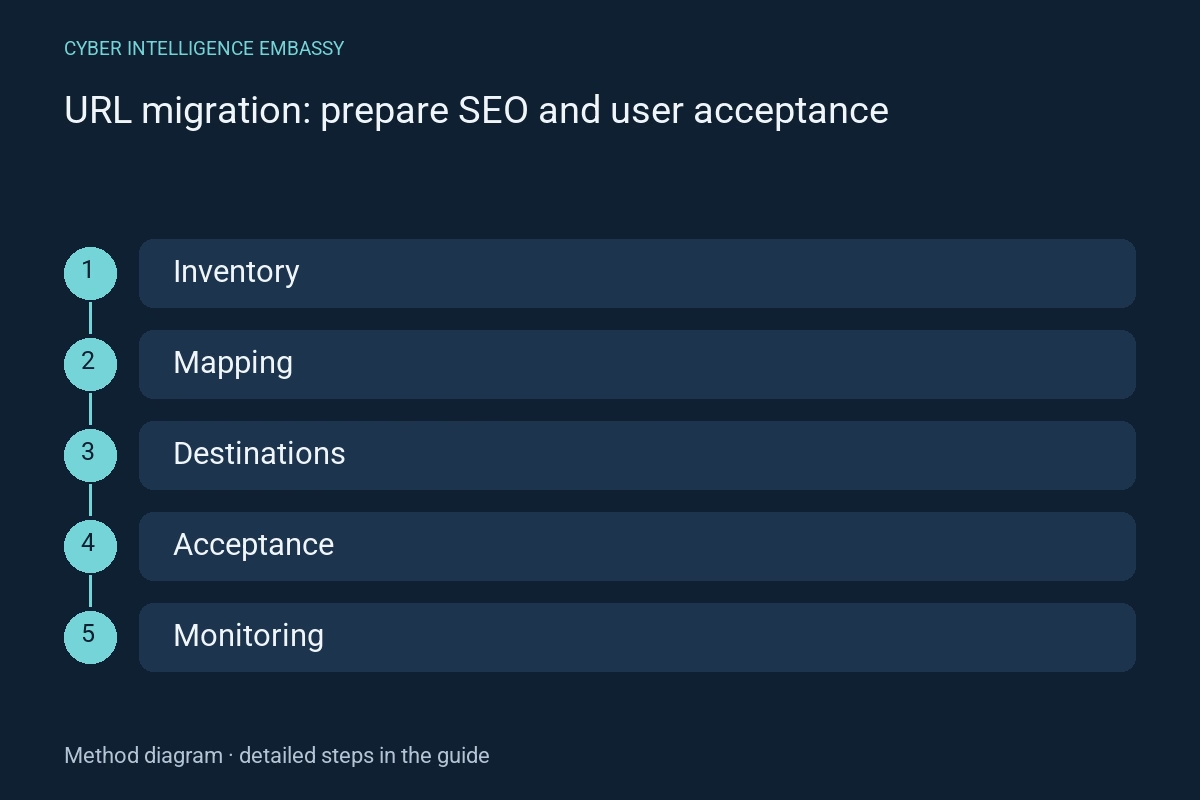
What this guide helps achieve
- Inventory useful URLs
- Choose relevant destinations
- Align signals
- Track post-cutover errors
Quick check
- Does every old URL have a decision?
- Does the redirect reach relevant content directly?
- Is the destination indexable?
- Are media included?
- Which access supports monitoring?
Step-by-step method
- 01
Gather old addresses
Combine content indexes, sitemaps and, where available, logs, analytics and known links. Include files and media. Record inventory sources: a sitemap alone can miss URLs still visited.
Deliverable: list and coverage assessment.
- 02
Assign decisions
Choose retention, relevant replacement, consolidation or removal per URL. Google discourages mass redirects to unrelated destinations. Removed content without an equivalent needs an explicit removal state.
Deliverable: mapping and rationale.
- 03
Prepare destinations
Check essential content, titles, media, links and expected functionality. Update canonical, language alternatives and sitemap. Ensure development restrictions do not accidentally block the version intended for publication.
Deliverable: destination acceptance.
- 04
Test paths
From each old URL check status, hop count and final destination. Include useful parameters and languages. A correct redirect can still lead to a broken form or download.
Deliverable: HTTP and task tests.
- 05
Organise cutover
Where possible, separate address migration from other major changes. Prepare an owner, error monitoring and rollback decisions. A hosting move without changed URLs needs a different acceptance plan.
Deliverable: change procedure.
- 06
Monitor without promises
Track old and new addresses, errors and observed coverage. Google describes possible fluctuations during reprocessing; no identical timeline can be promised for all sites. Examine important pages and unexpected destinations.
Deliverable: monitoring log and corrections.
Reusable worksheet
Complete with your authorised observations. These fields are a working template, not observed results.
| Field | Information to record |
|---|---|
| Old URL | Inventory source and served need |
| Decision | Retain, replace, consolidate or remove |
| Destination | Status, canonical, language and media |
| Validation | HTTP test, task, owner and date |
Worked example
Illustrative situation
Fictional example: two guides are consolidated but an old download URL is omitted.
Decision and expected evidence
Acceptance includes files, locates the document and tests links from previous journeys before closing the migration.
Distinguish the mechanisms
| Mechanism | Purpose | Check or limitation |
|---|---|---|
| Permanent redirect | Relevant lasting replacement | Test destination and chain |
| Canonical | Signal a preferred version | Does not move the user |
| 404 / 410 | Removal without an equivalent | Retain navigation help |
Management indicators
| Indicator | What it measures | First action |
|---|---|---|
| Mapping coverage | URLs with justified decisions | Handle unassigned addresses |
| Valid destinations | Final pages meeting the need | Correct status or content |
| Post-cutover errors | Actually observed failures | Prioritise essential journeys |
Common pitfalls
- Redirecting everything to home
- Keeping links to old addresses
- Forgetting images and downloads
- Promising unchanged rankings
Frequently asked questions
Can a canonical replace a redirect?
No. Canonical signals a preference to search engines; redirects also route requests and users.
Can the old sitemap be retained?
It can support transitional monitoring under the plan while the current sitemap describes destinations. Keep their roles distinct.
When is migration complete?
When agreed technical and business criteria pass, with indexing-monitoring limits stated. Cutover day alone is insufficient.
Official references
References consulted on 2 October 2026. The method and worksheet propose checks to adapt to your context; they do not constitute certification.
Continue exploring
Related analysis