Resources · 56
Social accounts: prepare impersonation, access loss and recovery
Connect accounts to owners, permissions and a verified response available when the main channel is compromised.
· 3 min
What this guide helps achieve
- Identify owners
- Limit access
- Keep a recovery route
- Qualify reports
Quick check
- Who actually owns the account?
- Does a former contractor retain a role?
- Does recovery depend on one person?
- Which channel confirms brand identity?
- Can reports be documented without republishing sensitive data?
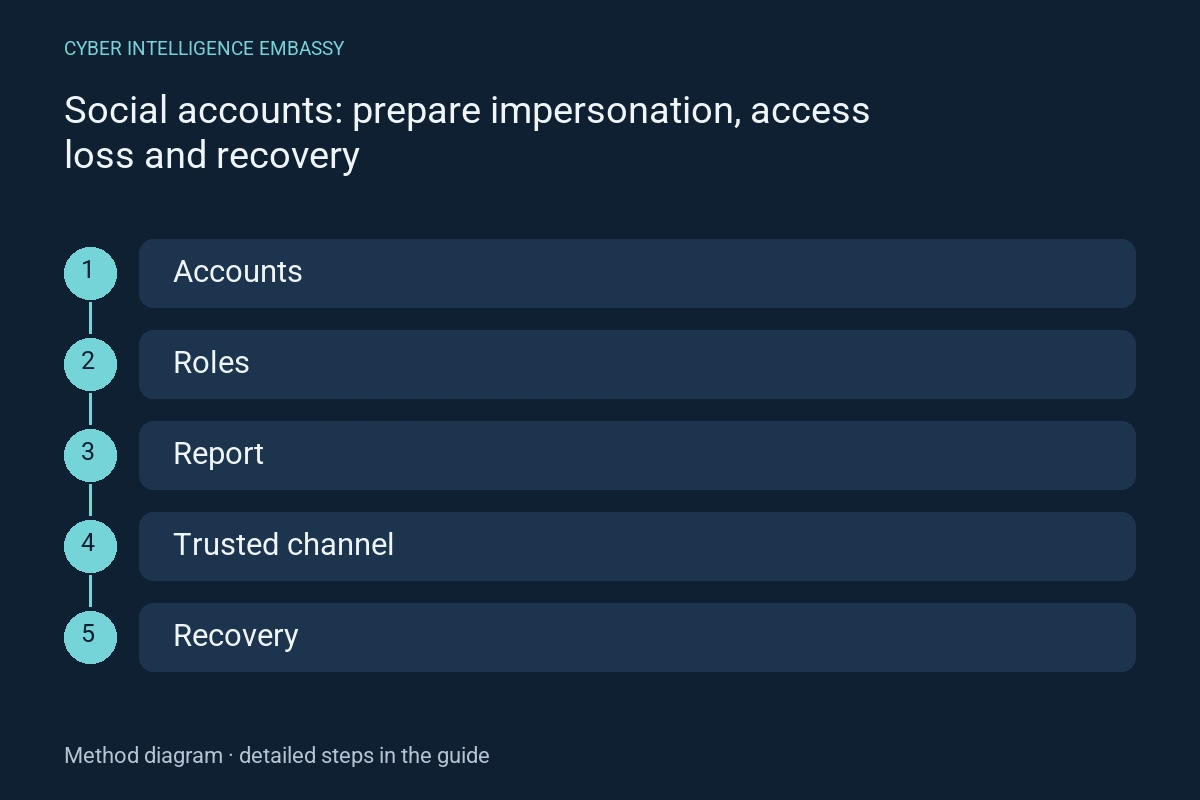
Step-by-step method
- 01
Inventory accounts
Record official URL, platform, owner, administrators and uses. Include advertising accounts and connected tools. Keep useful access references without copying passwords, recovery codes or keys.
Deliverable: secret-free inventory.
- 02
Review access
Use platform roles and remove unnecessary permissions. NCSC recommends sign-in protection and attention to digital footprints among other precautions. Have the actual owner validate changes.
Deliverable: permission and departure review.
- 03
Exercise recovery
In an authorised scenario, verify a deputy can find official procedures and reach the owner. Simulation does not require actual access loss. Document email, device and provider dependencies.
Deliverable: exercise and recovery limits.
- 04
Qualify reports
Separate lookalike accounts, alleged impersonation, unrecognised posts and unavailability. Retain URL, time and observation. Followers, age and badges alone do not prove current control by the expected owner.
Deliverable: facts and uncertainties.
- 05
Prepare a trusted channel
Choose an already known page or secondary channel for validated information. Identify official channels without amplifying fraudulent links. Review wording to avoid claiming an unconfirmed compromise.
Deliverable: message and approval path.
- 06
Close with review
After recovery or reporting, check roles, sessions, integrations and affected posts within platform capabilities. State what is confirmed and what still awaits the provider.
Deliverable: closure and remaining actions.
Reusable worksheet
Complete with your authorised observations. These fields are a working template, not observed results.
| Field | Information to record |
|---|---|
| Account | Official URL, platform and owner |
| Access | Roles and deputy without secrets |
| Signal | URL, date, observation and uncertainty |
| Response | Approval, channel and closure evidence |
Worked example
Illustrative situation
Fictional example: a fake account copies a brand name and image to request payment.
Decision and expected evidence
The team preserves observations, checks facts and publishes a clarification on its known channel with the appropriate reporting route.
Distinguish the mechanisms
| Mechanism | Purpose | Check or limitation |
|---|---|---|
| Impersonation | Another account claims to represent the brand | Verify identity and reporting route |
| Compromise | Unauthorised control of the real account | Recover access and integrations |
| Unavailability | Access failure or platform outage | Does not prove an attack |
Management indicators
| Indicator | What it measures | First action |
|---|---|---|
| Owned accounts | Accounts assigned to owners | Handle missing deputies |
| Reviewed rights | Roles checked after departure or change | Remove unnecessary access |
| Exercised recovery | Procedure found and understood | Fix dependence on one person |
Common pitfalls
- Keeping recovery codes in shared documents
- Treating badges as control evidence
- Publishing accusations before verification
- Relying on the compromised account to inform users
Frequently asked questions
Does a badge authenticate a message?
No. Check the exact account and context; a real account may also be compromised.
Must access be lost to test recovery?
No. A guided exercise can verify roles, contacts and procedures without changing credentials or interrupting the account.
Who should be contacted?
Use official platform procedures and known owners. Do not trust an unverified intermediary offering account recovery.
Official references
References consulted on 2 October 2026. The method and worksheet propose checks to adapt to your context; they do not constitute certification.
Continue exploring
Related analysis