Resources · 53
Search and facets: make a catalog usable
Connect customer language, reliable attributes and filter states to clear results and controlled URLs.
· 3 min
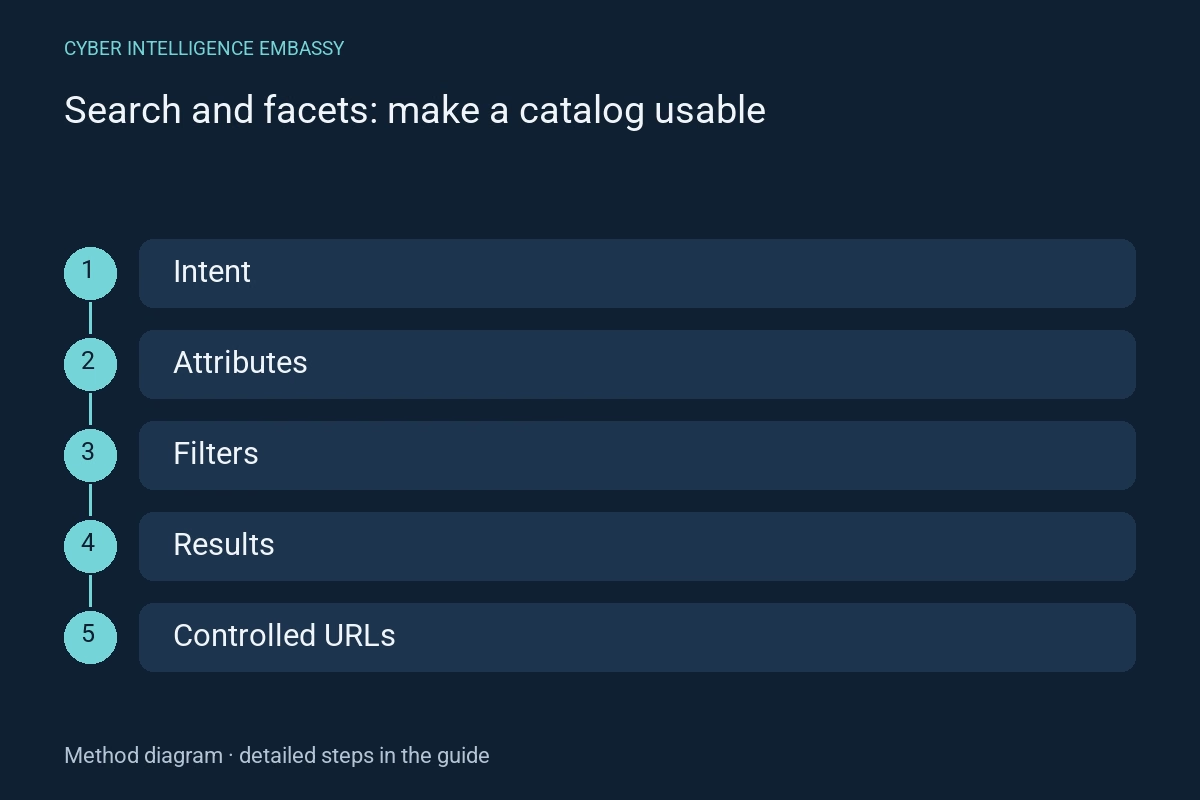
What this guide helps achieve
- Qualify attributes
- Test actual intents
- Preserve filter state
- Limit useless combinations
Quick check
- Are units and values coherent?
- Does a missing attribute exclude a product?
- Can one filter be removed?
- Does back navigation preserve state?
- Which facets deserve discoverable pages?
Step-by-step method
- 01
Collect intents
Build queries covering exact identifiers, needs, synonyms and typing errors. Have an offer specialist review expected results. Do not measure clicks alone: ambiguous labels can generate clicks without relevance.
Deliverable: queries and expected relevance.
- 02
Make attributes reliable
Normalise units, vocabulary, variants and missing values. Separate unknown, inapplicable and unavailable. Reconcile some results with authoritative catalog data before optimising ranking.
Deliverable: dictionary and data checks.
- 03
Make filters clear
Show active filters, result count and a way to remove each choice. Test keyboard, zoom and announcements after changes. Autocomplete, when used, needs a coherent accessible interaction model.
Deliverable: state and interaction acceptance.
- 04
Handle empty results
Explain which criteria produced no results and offer filter removal or reformulation. Do not present unavailable products as exact answers. Separate an empty catalog, an empty query result and search-service failure.
Deliverable: empty and unavailable states.
- 05
Decide crawlable URLs
Facet combinations can multiply URLs. Select pages serving an independent need and apply a consistent crawling strategy to others. Google specifies combination and no-result rules for facet URLs intended for crawling.
Deliverable: facet policy and URL tests.
- 06
Replay with current catalog
After imports or stock changes, rerun queries. Check variant availability through the cart, shared filters and back navigation. Classify failures as data, index, relevance or interface issues.
Deliverable: catalog regression report.
Reusable worksheet
Complete with your authorised observations. These fields are a working template, not observed results.
| Field | Information to record |
|---|---|
| Query | Intent, language and expected products |
| Filters | Attribute, unit, values and omissions |
| Result | Relevance, availability and empty state |
| URL | Intended crawling, canonical and back navigation |
Worked example
Illustrative situation
Fictional example: a size filter excludes a product whose value was imported in a different format.
Decision and expected evidence
The check fixes source vocabulary and rebuilds the index; hiding the filter would only conceal the defect.
Distinguish the mechanisms
| Mechanism | Purpose | Check or limitation |
|---|---|---|
| Search | Express free-form intent | Test synonyms and empty states |
| Facet | Narrow by attribute | Missing or incoherent values |
| Editorial category | Serve a stable need | Distinct content and relevant selection |
Management indicators
| Indicator | What it measures | First action |
|---|---|---|
| Zero-result queries | Valid queries without answers | Separate absent offers from broken indexing |
| Top-result relevance | Useful answers in the query set | Fix data before ranking |
| Crawled combinations | Facet URLs visited by crawlers | Review those without value |
Common pitfalls
- Creating a page for every filter
- Hiding active filters
- Confusing absence with failure
- Ignoring missing attributes
Frequently asked questions
Should every facet be indexed?
No. Choose those serving a distinct need with useful content; others require an appropriate crawling strategy.
Should an empty search return 404?
Internal search and crawlable facet URLs differ. Status follows the route contract; Google recommends 404 for crawlable no-result combinations.
How can a small team test this?
Start with important intents, exact references and edge cases, using reviewed expectations and dated data.
Official references
References consulted on 2 October 2026. The method and worksheet propose checks to adapt to your context; they do not constitute certification.
Continue exploring
Related analysis